
Q :Let’s start with resilience. What does resilience mean to you?
I think resilience means two things so far for me.
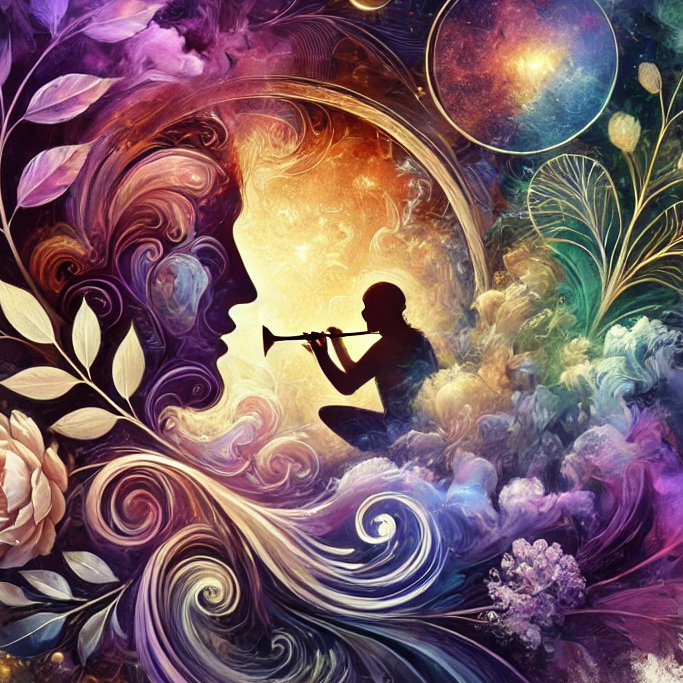
There is an inner humdrum that every human being has, a little beat that sets the pace at which their life ebbs and flows. And that beat, regardless of what is around us, if we are continuously aware of it first of all and then true to it, when we keep in step with it, I find there’s a certain level of indestructibility that we have innately as a result, without even trying. That’s our first level and our core sense of resilience.
And then there’s a second type of resilience, one that is learned through experiences that shake and break our world apart. When we go through things that challenge us at our core, things we weren’t prepared for, things that feel like they pull the ground from beneath our feet. When we encounter these experiences we learn a different kind of resilience. This second kind isn’t something we’re born with, but something we develop because of what we’ve gone through.
Q: Can you give an example of when you relied on that first, innate resilience?
I had an experience once upon a time when I almost got married, and it didn’t happen. You could say I was a would-have-been bride who got jilted at the altar.
In the moment, I was shattered. But what kicked in, given what I did after the actual shock of getting the news and trying to figure out what to do next, was that first type of resilience, that inner humdrum, that beat that urges you not to stop but to continue moving.
I remember someone telling me during this time that, “Healing comes in motion.” And I realized that by continuing to do what was expected of me, by keeping on moving and not stopping, that’s where I found hope and strength.
There were aspects of the second type of resilience that came later. You know, when you have had time to reflect and in retrospect, make sense of what happened. But in that moment, right after the heartbreak, what helped me survive wasn’t something I had to learn, it was something that was already in me. And I know that because throughout that whole process, I only truly broke down the first time I heard the news. I cried. It broke me completely. But it didn’t stop me. The next morning, I woke up and went to work. I still cried every now and then, but I kept moving, I kept going. Because there was a survival mode that switched on inside me, and all I did was put one foot in front of the other in rhythm with that inner drum beat, I kept showing up. And somehow, I found a way forward.
There’s something about the nature of our being that is indestructible, it’s beyond just our bodily organs finding ways to survive. Our entire being finds ways to survive, to move forward.
Q: And what about the second type of resilience? When have you had to build resilience rather than rely on what was already in you?
That came more from a professional perspective.
I was unhappy in a job that I was doing, and I could tell that if I didn’t change something, the outcome wasn’t going to be good. I was miserable and I knew that. But there was nothing in me that knew how to confront the situation itself. That’s the difference.
The second type of resilience concerns situations that we can’t simply endure, but rather have to learn how to navigate them. You can give yourself time to get over a heartbreak, but giving yourself more time in a bad work situation does not yield quit the same desired result. This can only be understood through lived experiences. Confronting death is another example. You can know life isn’t endless, but until you actually lose someone, or you’re faced with the reality that someone you love won’t be here forever, you don’t truly understand what loss of another being through death means. It’s something you learn by living through it.
And the biggest factor in whether or not we develop that second type of resilience? The nature of the support structures around us when these moments happen.
For me, I had very supportive structures. I had mentors who, when I was struggling, were able to call me back to myself. I love that phrase because that’s exactly what they did. They reminded me of who they knew I was, even when I couldn’t see it in myself at that moment. They reflected me back to me.
And that’s when I realized that resilience is not built in isolation. It comes from connection. It comes from the support structures we have when life hits us with something we aren’t prepared for, but somehow have to find ways to navigate through.
Q: Over time, have you learned how to call yourself back to yourself?
Yes. That’s exactly what I’ve been learning. And that’s why my mantra for this year is “I am my human.” It is a mantra that echoes my fully taking on the responsibility of taking care of the one human I have an obligation to make sure is ok, and that is myself. No more delegating.
Through this journey, I’ve learned that independence isn’t about not needing anyone, not at all. It’s about knowing how to care for myself so that when people do come into my life, they meet me in a space of strength, not survival.
I no longer see self-care as a way to keep people out, but as a way to create a healthy foundation for connection, for truly powerful support structures. I am not saying, “I don’t need anyone“, with this sentiment of not delegating my wellbeing to other humans. Instead, what I am saying is, “I want people in my life, but I need them to respect the way I care for myself, just as I respect the way they care for themselves.”
Because the way we love ourselves teaches others how to love us. We hear this so often now. And that shift, from survival-mode self-protection where we delegate our needs and wants to others out of a space of insecurity and desperation, to compassionate self-care where we take responsibility for our own wellbeing and happiness and others come in only to reinforce that care, that… has changed everything for me.
Once upon a time, I needed people to call me back to myself. Now, I know that I need to continue learning how to do that for myself.
Q: How do you know when you need to call yourself back? What are the signs?
One big sign is when I can’t keep one clear thought in my head. Normally, my mind is full of ideas, creative ones, insightful ones. I am always curious and am always making connections. But when things start to feel overwhelming, when my thoughts aren’t exciting but instead drowning me, I know something is off.
And then it moves to my body, I stop wanting to be active. I start numbing. For me, numbing looks like excessive TV, scrolling, or eating for the sake of eating. That’s when I know I’m avoiding something.
But the most important thing I have learnt thus far is? You can only recognize what unhealthy feels like if you remember what healthy felt like. That’s the key.
Q: So when you recognize these signs, how do you call yourself back?
The first step? Writing.
Writing is my sanctuary. Writing is how I breathe, how I heal, and how I process. I don’t talk to people at first, no, I have to go to the page. I need to empty my thoughts onto the paper before I can truly deal with them. It is not about fixing things immediately, no. It’s about first getting it all out.
But when writing isn’t enough, I move to stage two: actively seeking answers. And I don’t know how it happens, but when I need guidance, it always shows up. A book, a film, a conversation… something appears that speaks directly to what would be struggling with in that moment.
And this is where it feels almost spiritual. Some people call it “the universe.” Some call it intuition. But I think of it as something much older, much deeper, much like divine wisdom that has always been there. It’s not “new age thinking,” even though it’s often presented that way. I believe that it’s ancient. It’s the way people have always sought answers, through prayer, through searching, through asking and then listening.
Writing things down is, in some way, my form of prayer. It’s putting thoughts out into the world, to God the best way I know how, and waiting for the response. And when I do that, the answers come… they always come.
But I must add that, sometimes, when the weight is too heavy to carry alone, that it is okay to seek help from other humans. Therapy, mentors, family, friends. Resilience is personal, sure, but it isn’t solitary. We are strongest when we have a structure that supports us without becoming a crutch.
Q: How has your understanding of truth evolved over time?
For the last three years, I’ve been actively working on building my truth muscle, which is learning to tell myself the truth, or at least not lie.
This of course follows the Jordan Peterson rule: Tell the truth, or at least don’t lie. And that has been for me, a powerful foundation. It made me aware of the ways I would make small excuses, the ways I would try to rationalize things instead of confronting them.
But now, I’ve taken it a step further. Instead of just telling the truth, with each uncomfortable decision point or experience, I ask myself:
“Is this true for me?”
Recently, I have been stuck in a space of trying to follow systems, routines, and expectations because, according to prevailing public wisdom, they are supposed to work. I forced myself into structures that didn’t align with my rhythm, like the rigid time-blocking with my schedule that so many “time management gurus” talk about, and very stringent discipline that was starting to make me feel suffocated.
But now, instead of blindly accepting what’s considered “right,” I pause and ask: Is this true for me?
A perfect example? A few nights ago, I went out with a friend to a Korean chicken place. I had already committed to giving up meat for Lent. The wings were tempting, and there was pressure to order them. But when I really checked in with myself, I realized: I didn’t actually want them. My body, my spirit… they wanted the tofu.
Without even consciously saying the words, I had already asked myself, Is this true for me? And the answer was no. And because I listened, I walked away feeling content, not deprived.
Because it’s not just about not lying, no. It’s about living in full alignment with my truth. Before, I thought being honest was enough. Now, I know that living honestly, making choices that actually resonate with who I am, and am aiming to be, is even more important.
Q: Given this reflection, how does resilience and truth reinforce your sense of self ?
So this is what it means for me to be resilient, to be my human. It’s about listening to that inner drumbeat, the rhythm of my life song, and moving in harmony with it … not against it.
It’s about asking the right questions, making choices that align with who I am, and surrounding myself with people who support, NOT try to shape, my journey.
It’s about knowing that resilience isn’t just about enduring, but about growing. It’s about healing in the motion. And most of all, it’s about making sure that every step I take, and every decision that I make, rings true to me.
That’s the beat of my life song. That’s how I stay in step with my authentic self.

 Seeking Sophie
Leave a comment